Emergency Plumbing: What to Do Before Help Arrives
Sometimes plumbing emergencies strike out of nowhere. A pipe bursts in the middle of the night. Water starts pooling where it shouldn’t. It’s overwhelming, stressful, and downright scary. But there’s good news: with a few clear steps, you can minimize the mess and keep your home safe while you wait for help.
At Real Flow Plumbing, we understand how chaotic these moments feel. We’ve helped countless homeowners through urgent situations, from silent leaks to geysers in the kitchen. Here’s how you can take back control, even before a professional arrives.
Recognize a Plumbing Emergency 🚨
Not every drip or clog needs urgent attention, but some scenarios demand immediate action. Recognizing the difference is key.
Common emergencies include:
- Sudden gushes of water from burst pipes
- Flooding around toilets, sinks, or appliances
- The smell of gas or visible gas line leaks
- Sewage backing up into tubs or sinks
- No hot water in winter (risking frozen pipes)
- Water flowing from ceilings or walls
If water is where it shouldn’t be—or you smell gas—treat it like a fire drill. Quick decisions matter. The faster you spot the problem, the better chance you have to limit damage.
First Steps: What To Do Right Away
When panic hits, every second counts. Here’s what to do before you even pick up the phone.
Shut Off the Water
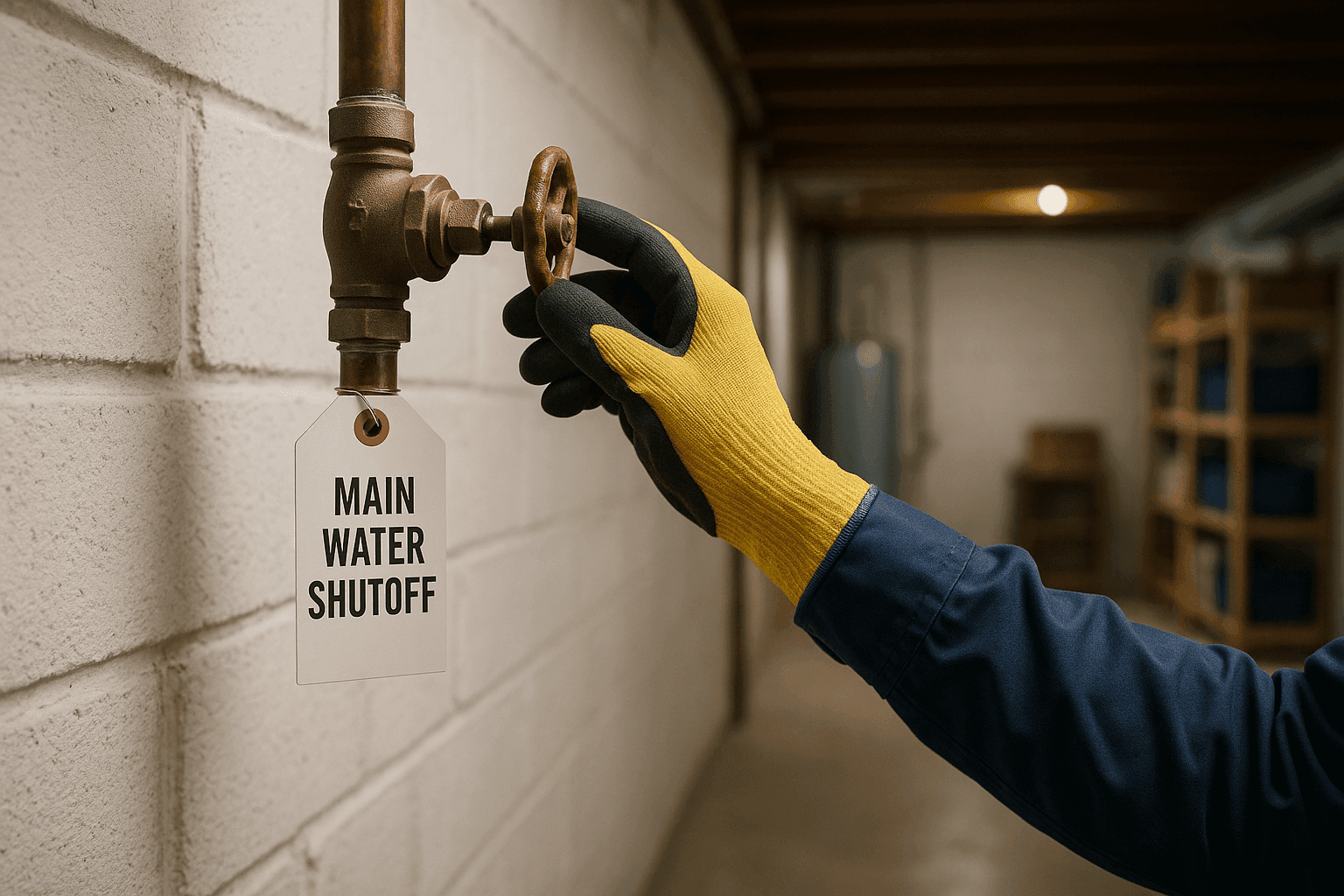
First, stop the flow. Your home has a main water valve—usually in the basement, garage, or outside along the foundation. Turn it clockwise (righty-tighty). For smaller leaks, individual shut-off valves under sinks or behind toilets can help.
Tip: If you don’t know where your main valve is, find it now—before an emergency strikes.
Turn Off the Power
If water is near outlets or electrical panels, shut off the power at your circuit breaker. Water and electricity are a dangerous mix.
Contain and Mop Up
Grab towels, buckets, or a mop. Block off the affected area with barriers if possible. Place buckets under leaks. The goal: keep water from spreading to dry areas or seeping into flooring.
For Gas Leaks
If you smell rotten eggs or hear hissing near a gas line, leave the house immediately. Don’t use electronics or switches. Once you’re safe, call your gas provider and 911.
Call for Help
When you call Real Flow Plumbing, be ready to describe:
- Where the leak or issue is
- When it started
- Any noises, smells, or visible water
- Steps you’ve already taken
The clearer your details, the faster we can help.
Protecting Your Home
Water isn’t just wet—it’s relentless. Like a slow-moving avalanche, it seeps, warps, and ruins what it touches. Protecting your home is about more than just puddles.
Practical steps:
- Move electronics, rugs, and valuables out of wet areas
- Open cabinets under sinks to help pipes dry and prevent mold
- If safe, use a wet/dry vacuum to remove standing water
- Place fans to circulate air and speed drying
For sewage backups: Avoid contact. Sewage carries harmful bacteria. Close doors to affected areas and keep children and pets away.
When to Evacuate
Sometimes the safest spot is outside your home. Here’s when you should leave:
- You can’t stop the water flow and it’s rising fast
- There’s a risk of ceiling collapse from water overhead
- You smell gas or suspect a major gas line break
- Sewage is flooding multiple rooms
Don’t risk your health or safety. Get out, call for help, and wait for professional guidance.
What to Tell Your Plumber
When calling for Emergency Plumbing in Mehlville, Missouri, or any location, give clear, detailed information:
- Nature of the emergency (burst pipe, major leak, gas smell, sewage backup)
- Exact location (kitchen, basement, bathroom)
- How long the problem has been present
- Any attempted fixes (shut-off valves, towels, etc.)
- Special access details (locked gates, pets, alarm codes)
This helps the Real Flow Plumbing team bring the right tools and parts to fix the problem quickly.
What to Expect from Professional Emergency Services
When our team arrives, here's what typically happens:
- Quick assessment of the situation and safety risks
- Stopping water or gas flow if you haven’t already
- Containing further damage (temporary patches, pipe clamps, sump pump use)
- Diagnosing the root cause (leak detection, camera inspection, pressure testing)
- Explaining options for permanent repair or replacement
- Providing an overview of what needs fixing now and what can wait
We follow local codes, manufacturer guidelines, and safety standards from organizations like the International Code Council (ICC) and the Occupational Safety and Health Administration (OSHA).
How to Prevent Further Damage
- Don’t use electrical appliances near water
- Avoid plunging drains if you suspect a broken pipe—you could make it worse
- Don’t pour chemicals into a backup or overflow; they can harm pipes and your health
- Keep children and pets away from the affected area
The main goal: stop the spread, stay safe, and leave repairs to the pros.
When to Try DIY—and When to Stop
It’s tempting to fix things yourself. For small clogs or minor drips, you might succeed. But with major leaks, gas smells, or sewage, it’s time to call for emergency-plumbing.
DIY is okay when:
- The leak is slow and contained
- The clog is local (one sink or toilet)
- You have the right tools (like a plunger or shut-off wrench)
Stop and call for help if:
- You can’t find the source of the problem
- Multiple fixtures are affected (could be a main line issue)
- There’s visible water damage to walls, ceilings, or floors
- You smell gas or see sparks
Prevention and Maintenance
Most plumbing emergencies can be prevented with regular maintenance. Schedule annual Gas Safety Checks near you, inspect hoses and shut-off valves, and watch for warning signs like slow drains or changes in water pressure.
Other smart moves:
- Know where all shut-off valves are
- Replace old hoses on washing machines
- Don’t ignore small drips—they rarely fix themselves
The U.S. Environmental Protection Agency (EPA) recommends fixing leaks promptly to prevent water waste and damage.
Costs and Time Factors
Plumbing emergencies rarely happen at convenient times. Costs and repair timelines can vary based on:
- The location and severity of the leak or break
- Time of day (after-hours or weekends may cost more)
- Parts and labor needed for repair or replacement
While every situation is unique, immediate action can help reduce both damage and expenses. Our team will always explain your options before starting work.
Frequently Asked Questions
Q: Should I turn off my water heater during a leak?
A: If you’ve shut off the main water supply, turn off your water heater, too—especially if it’s gas-powered. This prevents heat buildup and pressure.
Q: What should I do if my toilet overflows?
A: Turn off the valve behind the toilet. Use towels to contain water. Don’t flush again until the cause is fixed.
Q: Is it safe to stay in my house during a plumbing emergency?
A: If water is near electrical outlets, you smell gas, or ceilings are bulging, evacuate and wait for help.
Q: How can I avoid emergencies in the future?
A: Regular maintenance, knowing your shut-offs, and fixing minor issues early are your best defenses.
Local and Seasonal Considerations
In winter, pipes can freeze and burst. Open cabinets under sinks to let warm air circulate. Let faucets drip slowly during deep freezes. After storms, check basements and crawl spaces for rising water or slow leaks.
If you live in an area with older infrastructure, regular sewer line inspections are a smart precaution.
Emergencies are never fun—but you’re not powerless. Stay calm, follow these steps, and let Real Flow Plumbing handle the rest. Your home is worth protecting.
Call Real Flow Plumbing now — or reach us anytime at 877-879-7039 .