How to Prevent Frozen Pipes in Winter
Winter can turn your home’s pipes into hidden time bombs. One cold snap, and suddenly you’re dealing with burst pipes, water damage, and frantic calls for help. It’s stressful, messy, and expensive.
At Real Flow Plumbing, we know the havoc frozen pipes can bring. We’re here to help you avoid disaster with straightforward, proven steps. Let’s get your plumbing ready for the cold—before the cold gets to you.
Why Pipes Freeze
Water is stubborn. When temperatures drop below 32°F (0°C), the water inside your pipes can freeze. As it freezes, it expands—like a soda can left in the freezer. This pressure can cause pipes to crack or even burst, sending water everywhere once things thaw.
But not all pipes are at equal risk. The ones closest to the cold are the first to suffer.
High-Risk Areas 🚩
Some pipes are more exposed to winter’s chill than others. Here’s where you should pay extra attention:
- Unheated basements and crawl spaces: Cold air seeps in, chilling pipes quickly.
- Attics and garages: Often uninsulated, these spaces can get as cold as the outdoors.
- Exterior walls: Pipes running through outer walls feel the brunt of winter.
- Under kitchen and bathroom sinks: Especially if the cabinets stay closed, trapping cold air inside.
If your home has pipes in these spots, consider them high-risk and prioritize them in your winter prep.
DIY Prevention Tips
You don’t need a toolbox full of gadgets to keep your pipes safe—just a little know-how and a few supplies.
1. Insulate Exposed Pipes
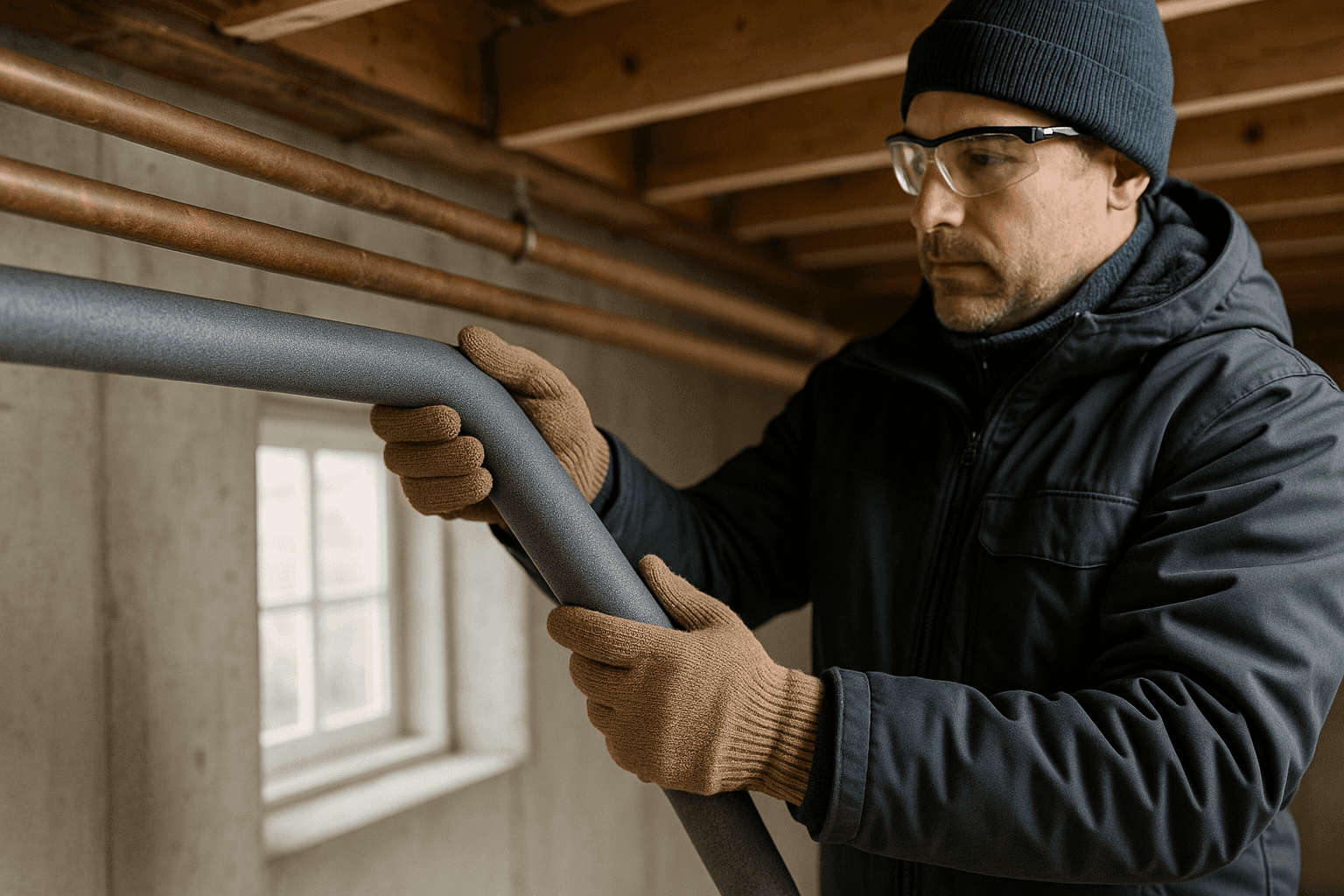
Wrap foam pipe insulation around pipes in unheated spaces. It’s like giving your pipes a winter coat. Focus on areas in basements, attics, and along exterior walls.
2. Use Heat Tape
For pipes that get especially cold, heat tape is like an electric blanket. Carefully follow the manufacturer’s instructions and safety guidelines from the Consumer Product Safety Commission.
3. Keep Faucets Trickling
On bitterly cold nights, let cold water drip from the faucet. The moving water helps prevent freezing, like a stream that keeps flowing even when the pond next to it ices over.
4. Open Cabinet Doors
Open bathroom and kitchen cabinets to let warm air circulate around pipes. Just remember to move any household cleaners out of reach if you have small children or pets.
5. Seal Drafts
Close up cracks and holes in walls near pipes using caulk or spray foam. You’re not just keeping out the wind—you’re locking in warmth for your plumbing.
6. Maintain Indoor Heat
Keep your thermostat at 55°F (13°C) or higher, even if you’re away. Sudden drops in temperature inside can spell trouble for your pipes.
7. Disconnect Outdoor Hoses
Drain and store hoses. Shut off and drain exterior faucets (sometimes called “hose bibs”) to keep outside cold from traveling inside.
What to Do if a Pipe Freezes ❄️
If you turn on a faucet and only a trickle comes out, suspect a frozen pipe. Don’t panic—but don’t ignore it either.
Immediate steps:
- Keep the faucet open. As the pipe thaws, water will start to flow and help melt any ice inside.
- Apply gentle heat. Use a hair dryer, heat lamp, or warm towels. Start near the faucet and work your way toward the frozen section. Never use an open flame.
- Check for leaks. Once the pipe thaws, inspect carefully. If you see cracks or water damage, shut off your home’s main water valve and call a plumber right away.
Burst pipe? Time is critical. Water damage can escalate quickly. That’s when you want Pipe Repair near me in Bridgeton, New Jersey.
Long-Term Solutions: Professional Winterization
DIY steps are great, but sometimes you need a deeper fix. Here’s how a professional can help protect your home for many winters to come:
- Pipe rerouting: Moving vulnerable pipes out of unheated spaces.
- Upgrading insulation: Applying high-grade insulation or installing insulated pipe sleeves.
- Installing frost-proof outdoor faucets: These fixtures are designed for cold climates.
- Pipe replacement: Swapping out old, corrosion-prone pipes for modern, durable materials.
A licensed plumber can also perform preventative maintenance checks, using thermal imaging or leak detection tools to spot risks before they become emergencies.
Frequently Asked Questions
How cold does it need to get for pipes to freeze?
Pipes can start freezing when temperatures drop below 20°F (-6°C) for six hours or more, according to the Building Research Council at the University of Illinois.
What pipes are most likely to burst?
Uninsulated pipes in exterior walls, crawl spaces, and attics are the first to freeze and burst.
Is it enough to just let faucets drip?
Dripping helps, but it isn’t a magic bullet. Combine it with insulation and sealing drafts for best results.
Can I use a space heater to warm pipes?
You can, but use caution. Never leave a space heater unattended or place it too close to flammable materials. Safety first.
Local and Seasonal Considerations 🏠
Bridgeton winters can be unpredictable. One week might be mild, the next brings sudden cold snaps. Even if your home has weathered past winters without issues, remember: pipes age, insulation settles, and climate patterns shift.
Regular checks and pipe repair assessments are a smart move—especially before winter sets in. And if you’re new to your home, a professional plumbing inspection can spot hidden risks you might not notice.
Ready for Winter? Here’s Your Action Plan
- Walk through your home and list exposed pipes.
- Stock up on foam insulation and heat tape.
- Set reminders to drip faucets and open cabinets during cold spells.
- Schedule a plumbing checkup for added peace of mind.
Don’t wait for a frozen pipe to make itself known. Take action now and enjoy a warm, worry-free winter.
Call Real Flow Plumbing now — or reach us anytime at 877-879-7039 .