What to Expect During a Professional Leak Detection Service
Is there a mysterious puddle on your floor? Do you hear the drip-drip of water behind a wall, even when every faucet is off? You’re not alone. Hidden leaks are a common—and stressful—problem for homeowners. They can sneak up on you, causing damage before you even know there’s an issue. The good news: professional help is close at hand.
At Real Flow Plumbing, we know how important it is to catch leaks early. Our licensed, trained technicians use advanced, non-invasive tools to find the source fast, with minimal disruption to your home and routine.
Why Leaks Are a Big Deal
Leaks are like silent thieves. They steal away your peace of mind—and sometimes, your savings. Left unchecked, a small leak can turn into warped floors, peeling paint, mold, and even structural damage. The Environmental Protection Agency (EPA) estimates that the average household’s leaks can waste nearly 10,000 gallons of water each year. That’s enough to fill a backyard swimming pool.
But leaks don’t just waste water. They can drive up your utility bills and, if left untreated, lead to costly repairs. That’s why quick, professional leak-detection makes all the difference.
Quick Safety Checklist Before Your Appointment 🛑
Before your leak detection appointment, take a few minutes to:
- Turn off all water-using appliances (dishwasher, washing machine, sprinklers).
- Make a note of any wet spots, drips, or water stains you’ve seen.
- Move furniture or valuables away from suspected leak areas.
- Keep pets and children clear of work zones.
- Know where your main water shut-off valve is—just in case.
These steps help both you and your plumbing technician get the most from the visit.
Should You Try DIY First, or Call a Pro?
It’s tempting to play detective when you spot a leak. Sometimes, you can find the culprit—a loose faucet or a dripping pipe under the sink. But leaks often hide out of sight, inside walls or under floors. That’s when DIY fixes can do more harm than good.
Pros have tools and training that go far beyond a flashlight and a wrench. They use:
- Acoustic sensors to “listen” for water movement inside pipes.
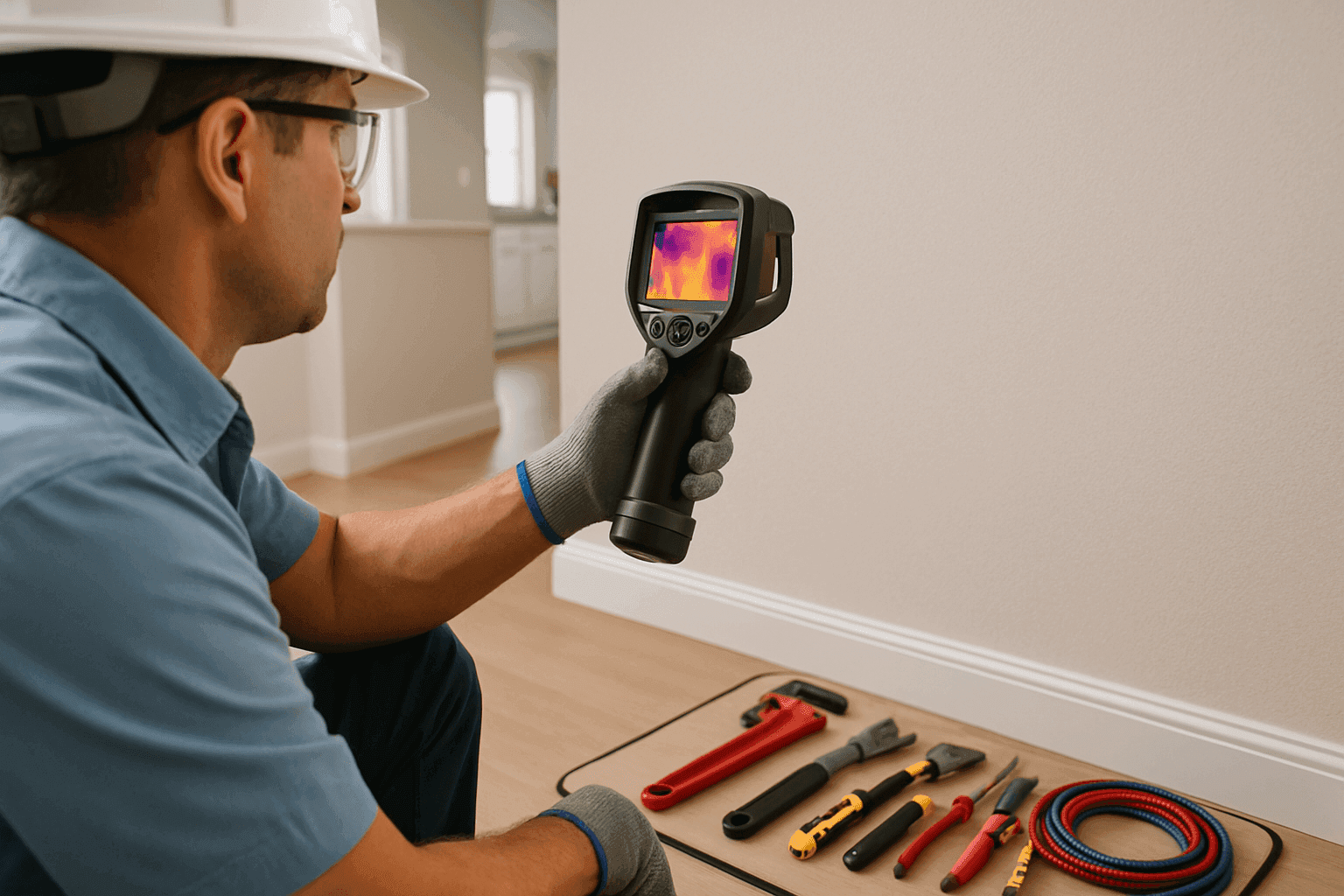
- Thermal imaging cameras to spot temperature changes caused by moisture.
- Video inspection cameras to snake through pipes and pinpoint hidden trouble.
If you can’t see or easily access the leak, if water stains spread, or if your water bill has jumped, it’s time to call in the pros for leak-repair.
What Happens During a Leak Detection Visit?
Here’s what you can expect when Real Flow Plumbing arrives at your door:
1. Friendly Greeting and Assessment
Our technician will introduce themselves and ask about your concerns. The more details you provide—when you noticed the problem, where water is pooling, any odd sounds—the better.
2. Visual Inspection
We’ll check the obvious places first: under sinks, around toilets, near appliances, and in basements or crawl spaces. Sometimes, the source is right in front of us.
3. Non-Invasive Testing
If the leak is hidden, we break out advanced tools:
- Acoustic leak detectors pick up the sound of water moving through pipes, even behind walls or under concrete.
- Thermal imaging reveals cold spots or heat patterns that signal moisture.
- Video cameras let us “see” inside pipes without opening up your walls or floors.
- Moisture meters measure dampness in walls, floors, and ceilings.
These methods mean less mess, less guesswork, and faster results.
4. Diagnosing and Explaining
Once we find the leak, we’ll show you the evidence and explain your options. Sometimes, repairs can happen on the spot. Other times, we’ll help you schedule a follow-up for more extensive work.
5. Clean-Up and Next Steps
We leave your home just as tidy as we found it—and provide tips to prevent future leaks.
Why Early Detection Matters
Catching leaks early is like patching a small hole in a boat before it becomes a gaping crack. Early detection means:
- Preventing major water damage to floors, walls, and foundations.
- Saving money on water bills and future repairs.
- Protecting your home from mold, mildew, and unhealthy air.
- Complying with local building codes and safety guidelines.
According to the International Association of Certified Home Inspectors (InterNACHI), early plumbing inspections are key to keeping homes safe and efficient.
Preparing Your Home for Leak Detection
To help your appointment go smoothly:
- Clear access to sinks, water heaters, and utility rooms.
- Remove clutter from around water meters and valves.
- Write down any questions or concerns beforehand.
- If you live in an older home, gather any plumbing records you have.
A little prep work lets your technician get right to the heart of the problem.
Prevention & Maintenance: Keep Leaks Away
Regular plumbing checkups catch small issues before they become big headaches. Here’s how to stay ahead:
- Schedule annual inspections—especially if your home is 20+ years old.
- Watch for signs: unexplained dampness, musty smells, or jumping water bills.
- Install water alarms or smart leak detectors for early alerts.
- Don’t ignore slow drains, running toilets, or gurgling pipes—these can signal hidden leaks.
Read more about how preventative maintenance can extend the life of your plumbing systems in our leak-detection service guide.
Costs & Time Factors: What to Expect
Leak detection services vary in cost, depending on your home’s size, plumbing system, and the leak’s location. Most appointments take one to three hours. If multiple leaks or complex piping are involved, it may take longer.
While prices differ, investing in early leak detection is far less expensive than fixing major water damage later. According to the Insurance Information Institute, water damage is one of the most common and costly homeowner claims—so catching leaks early can save thousands.
When It’s an Emergency
Some leaks just can’t wait. Call for emergency plumbing service if:
- Water is gushing uncontrollably.
- You see signs of electrical hazards (sparking outlets, wet breaker boxes).
- Sewage or foul odors are present.
- There’s a risk of flooding or structural collapse.
In these cases, shut off your main water valve and call Real Flow Plumbing immediately. We offer fast response and safe, effective repairs for urgent issues.
Leak Detection FAQ
How do pros find leaks without tearing up my house?
We use acoustic sensors, thermal cameras, and video scopes. These tools “see” and “hear” leaks through walls and floors, so there’s no need for demolition.
What should I do if I suspect a leak but can’t find it?
Turn off all water appliances, check your meter for movement, and call a professional if you notice unexplained water use or damage.
Will my water be shut off during inspection?
Usually, only for a short time—if at all. Most leak detection testing is minimally disruptive.
Can I prevent leaks in the future?
Yes! Regular maintenance, prompt repairs, and installing water alarms can all help prevent surprise leaks.
Local & Seasonal Considerations
Leaks don’t take a season off. But weather can play a role. Freezing winters can cause pipes to burst; heavy rains may stress sewer lines. If you’re in a region prone to extreme temperatures or storms, consider a seasonal plumbing inspection.
Looking for Leak Detection near Socastee, South Carolina? Real Flow Plumbing serves your neighborhood with reliable, non-invasive service—rain or shine.
Water leaks don’t have to be a mystery—or a nightmare. With the right tools and the right team, you can protect your home and your peace of mind.
Call Real Flow Plumbing now — or reach us anytime at 877-879-7039 .