Water Heater Installation: Tank vs. Tankless Pros and Cons
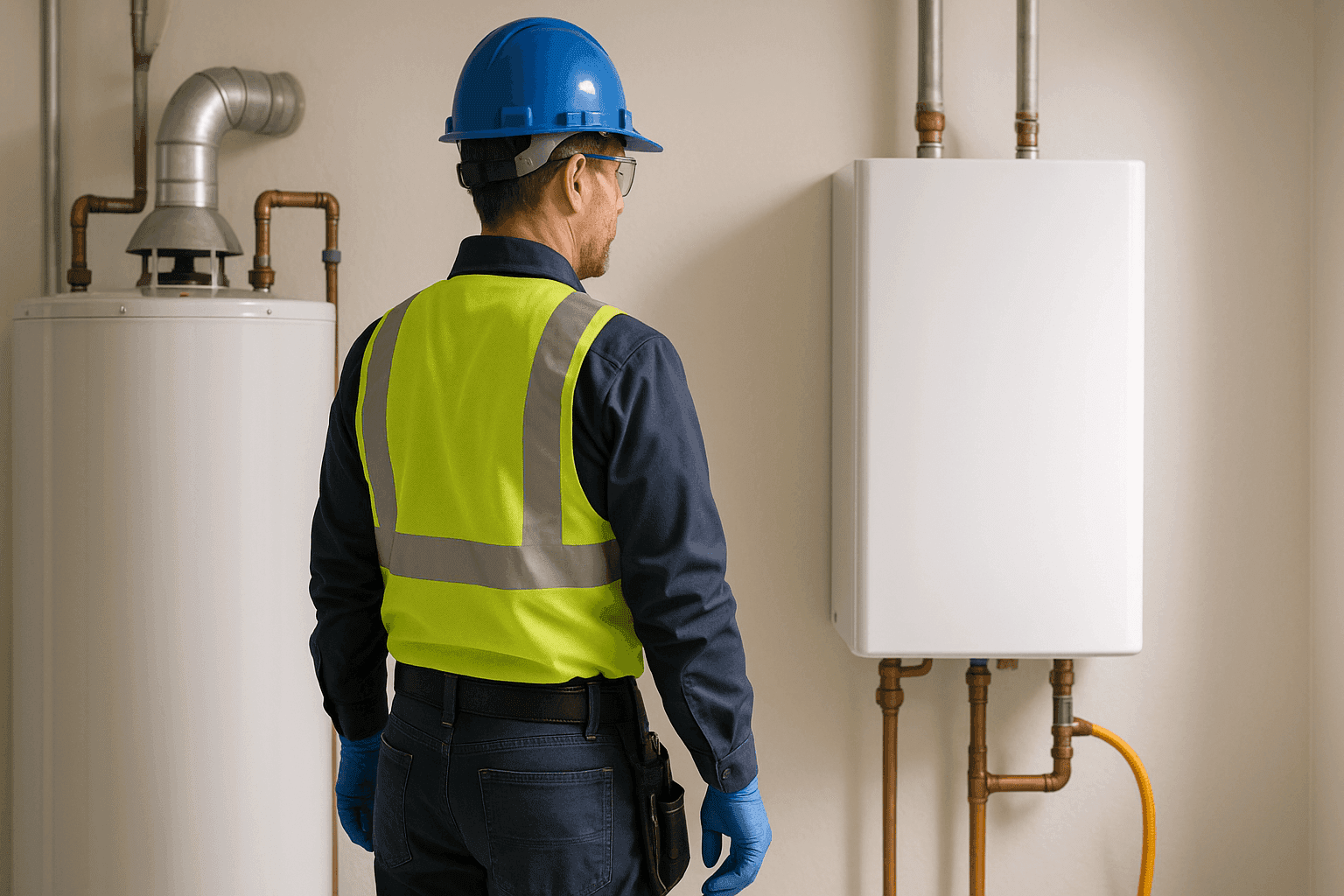
Is your current water heater leaving you in the cold—or running up the bills? Thinking about upgrading, but not sure if a tank or tankless system fits your home best? It can feel like a fork in the road, where every option has its own tradeoffs.
At Real Flow Plumbing, we help homeowners make sense of the choices. Here’s a clear, practical look at both options, so you can decide what works for your family—without second-guessing your decision later.
How Tank and Tankless Water Heaters Work
Water heaters might seem like magic boxes, but they're pretty straightforward once you see what’s under the hood.
Tank water heaters are the old faithfuls. They store a set amount of hot water (typically 40–80 gallons) in a large insulated tank, keeping it heated and ready to use. When you turn on the tap, hot water flows out, and cold water refills the tank. Once the stored supply runs low—especially if everyone’s showering at once—you may have to wait for it to reheat.
Tankless water heaters, sometimes called “on-demand,” skip the storage entirely. They heat water instantly as it passes through the unit. No big tank, just a compact box on your wall. When you need hot water, it fires up and delivers it straight to your faucet.
Tank vs. Tankless: Pros and Cons 🛠️
Here’s a breakdown—no fluff, just the facts.
Tank Water Heaters
Pros:
- Lower up-front cost
- Simple installation (well-suited to most homes)
- Reliable, proven technology
- Works even with high simultaneous demand (if your tank is big enough)
Cons:
- Limited supply—run out, and you wait for reheating
- Higher energy bills (heats water even when you’re not using it)
- Takes up significant space
- Shorter lifespan (average 8–12 years)
Tankless Water Heaters
Pros:
- Endless hot water (as long as the unit matches your demand)
- Saves energy—heats only when needed
- Compact, wall-mounted design
- Longer lifespan (15–20+ years)
Cons:
- Higher up-front cost
- May need upgrades to gas lines or electrical (adds to install time/cost)
- Can struggle with heavy simultaneous use (multiple showers at once)
- Requires periodic descaling (especially in hard water areas)
Quick Safety Checklist
Before you swap or upgrade your water heater, run through these must-dos:
- Check local plumbing codes—requirements can vary (see International Plumbing Code or your city’s guidelines).
- For gas units: Schedule Gas Safety Checks near you. Leaks or improper venting can be dangerous.
- Confirm electrical needs: Tankless models often need dedicated circuits.
- Adequate space: Tank units need room to access and maintain.
- Water pressure: Too high or too low can impact performance.
- Shutoff valves: Know where yours are, and test before starting any work.
DIY vs. Call a Pro
Swapping out a water heater isn’t like changing a lightbulb. It means handling water, gas, and electricity—sometimes all at once.
DIY might seem tempting if you’re handy, but even a small mistake can cause leaks, fire hazards, or code violations. That’s why most building codes require professional installation for anything involving gas or major plumbing changes.
A licensed plumber can:
- Size the unit to your home and family needs
- Handle all hookups safely (gas, water, electric)
- Pull permits and pass inspections
- Dispose of your old unit responsibly
If you’re still not sure, try this: If you own a full set of plumbing tools and have installed a water heater before, it might be worth a go. If not, save yourself the headache.
What Pros Do On Arrival
When you call Real Flow Plumbing for water heater installation, here’s what you can expect:
- Evaluate your current setup and water usage
- Recommend a tank or tankless model (based on your needs, budget, and home)
- Check for code compliance (gas lines, venting, electrical)
- Remove your old unit safely
- Install new lines, valves, or vents if needed
- Fully test for leaks, gas safety, and performance
- Walk you through the new system and answer questions
We also offer water heater repair if your current unit just needs a little TLC.
Prevention & Maintenance
Want your new water heater to last? Don’t set it and forget it. Here’s what helps:
For tank models:
- Drain and flush the tank once a year to remove sediment
- Check the anode rod every 2–3 years (it helps prevent rust)
- Insulate the tank and pipes if your area gets cold
For tankless models:
- Descale the unit yearly (more often in hard water areas)
- Clean inlet filters
- Inspect venting for blockages or corrosion
For both, keep an eye out for leaks, strange noises, or trouble reaching temperature. Early fixes are almost always cheaper.
Costs & Time Factors
Here’s the real-world breakdown—no sticker shock, just what to expect:
- Tank water heaters: Lower up-front cost. Install time: 2–4 hours, sometimes same-day if it’s a straight swap.
- Tankless water heaters: Higher up-front cost. Install time: 4–8 hours, especially if new gas lines or venting are needed.
- Energy bills: Tankless units can cut your energy use by 20–35% (U.S. Department of Energy).
- Ongoing costs: Maintenance for both, but tankless may need pro descaling.
The best choice isn’t always the cheapest—it’s the one that fits your home, family, and hot water habits.
When It’s an Emergency
No hot water in the middle of winter? Water pooling around your tank? That’s not the time to debate. Shut off your water and call for emergency plumbing help. Leaks, especially from gas-powered units, can quickly turn dangerous.
If you smell gas, evacuate your home and call your gas utility and the fire department before anything else.
FAQ
How long do water heaters last?
Tank models: around 8–12 years. Tankless: 15–20+ years with regular maintenance.
Can I install a tankless unit where my tank heater was?
Sometimes. But you may need upgraded gas lines, venting, or electric. A pro can assess your exact setup.
What size water heater do I need?
That depends on family size, number of bathrooms, and how often you run appliances. A plumber will size it right for you.
Will a tankless heater really save me money?
Long-term, yes—because it only heats water when you need it. But up-front costs are higher, so savings add up over years.
Local/Seasonal Considerations
Cold winters? Tankless units may need a higher flow rate to keep up. Hard water in your area? Both types need more frequent maintenance. If you live in or around Jonesboro, Arkansas, Real Flow Plumbing knows the seasonal challenges and the local code requirements for safe, reliable water heater installs. For more information, see Water Heater Installation near Jonesboro, Arkansas.
Deciding between tank and tankless water heaters is a big call—but you don’t have to make it alone. Real Flow Plumbing is here to talk through your options, handle safe installation, and keep your home comfortable year-round.
Call Real Flow Plumbing now — or reach us anytime at 877-879-7039 .